

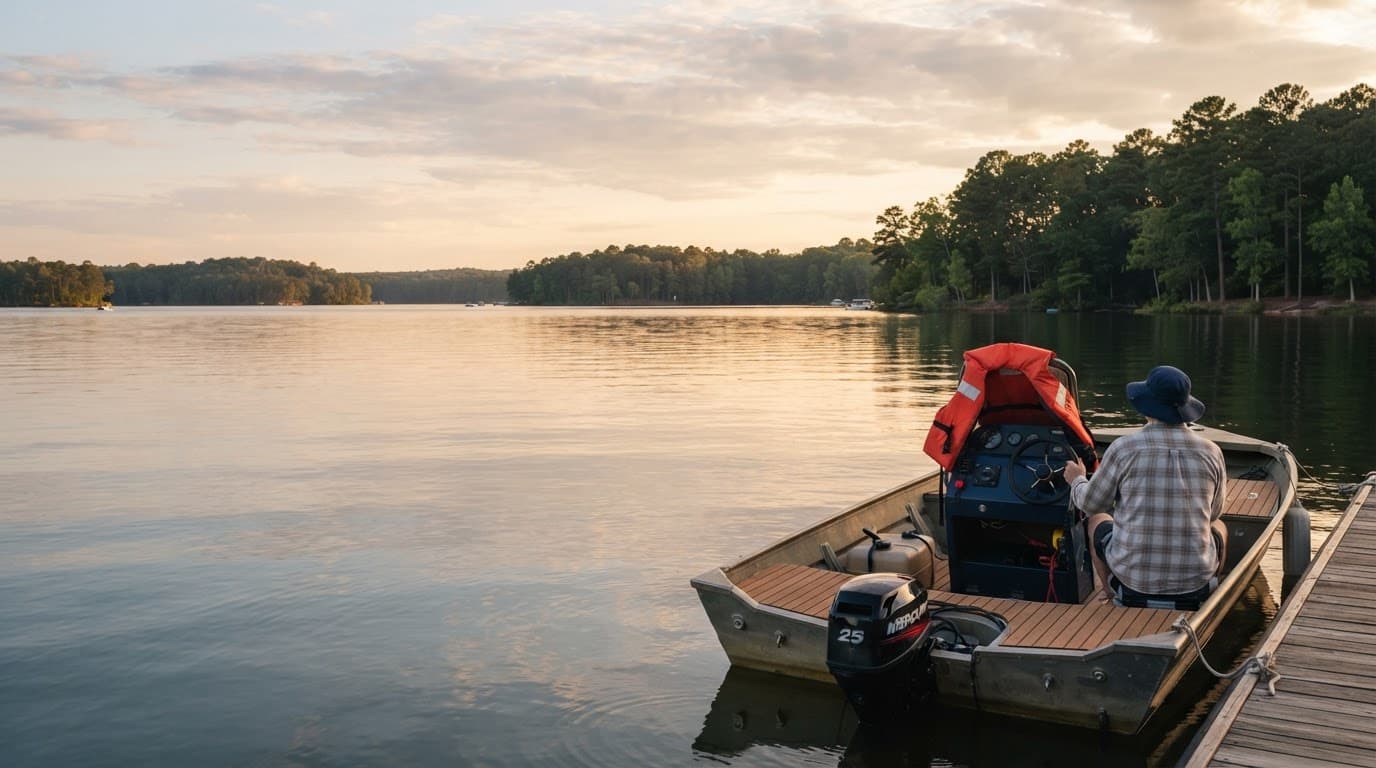
Why Boating Safety Matters Across GA
Boating conditions across GA can change quickly depending on the lake, season, vessel traffic, and afternoon weather.
From busy weekends near Atlanta to popular launch points serving Marietta, Roswell, Alpharetta, and Sandy Springs residents, safe boating starts with planning before the boat leaves the dock.
This guide covers the basics that help reduce accidents, improve response time during emergencies, and support safer family recreation throughout GA.
Core Safety Basics Every Boater Should Know
Safe operation begins with understanding right-of-way, keeping a proper lookout, controlling speed, and avoiding alcohol while operating a vessel. Georgia boaters should also understand that conditions on large lakes can be very different from protected coves or smaller local waterways.
Sun glare, floating debris, wake from larger vessels, and crowded holiday traffic can affect reaction time.
Whether launching near Woodstock as a home base or traveling from Kennesaw, Canton, Acworth, Cumming, or Buford to a larger lake, the same safety principles apply: stay alert, know the water, and prepare for changing conditions.
Basic Safety Priorities
- Wear properly fitted life jackets, especially for children and weaker swimmers
- Assign an operator who stays sober and attentive for the entire trip
- Check navigation lights, horn, engine function, and battery charge before departure
- Carry a float plan so someone on land knows where the boat is going
- Reduce speed in crowded areas, no-wake zones, and poor visibility
Not sure your coverage is enough?
A local agent at The Larson Group can check it with you, free.
Licensed Georgia agents · The Larson Group
Required Equipment and Recommended Gear
Georgia boating safety depends on carrying both legally required equipment and practical emergency gear. Life jackets, fire extinguishers, visual distress items when appropriate, navigation lights, and sound-producing devices are common essentials.
Beyond legal minimums, boaters across GA benefit from keeping a first-aid kit, extra drinking water, a charged phone in a waterproof case, dock lines, an anchor, and basic tools onboard.
On larger, busier waters used by people from Atlanta, Dunwoody, Smyrna, and Dallas, backup gear can make a major difference when a minor problem turns into a delay or emergency.
Helpful Onboard Gear
- USCG-approved life jackets for each person onboard
- Throwable flotation device when required for the vessel
- Fire extinguisher in working condition
- Whistle or horn for signaling
- First-aid kit, flashlight, and spare batteries
- Emergency paddle, anchor, and dock lines
Weather Awareness on Georgia Waterways
Afternoon thunderstorms, strong wind shifts, lightning, and sudden visibility changes are common safety concerns throughout GA. Conditions may look calm at launch and become dangerous an hour later, especially on open water where wave action builds quickly.
Boaters should review the forecast before departure and keep monitoring the sky while underway. Darkening clouds, increasing chop, and distant thunder are signs to head in early.
This is especially important on heavily used lakes drawing boaters from Atlanta, Alpharetta, Roswell, and Cumming, where crowded ramps and shoreline congestion can slow a return to safety.
Want a quote for your own policy?
It takes a few minutes and there is no obligation.
Licensed Georgia agents · The Larson Group
Navigation, Traffic, and Local Water Conditions
Popular Georgia lakes can have intense traffic on weekends, including personal watercraft, wake boats, fishing boats, and rental vessels sharing the same water.
Safe navigation means keeping distance, watching for inexperienced operators, and understanding that wakes can be hazardous near docks, coves, and smaller boats.
Boaters throughout GA should also watch for shallow areas, submerged objects, floating timber after storms, and changing shoreline conditions during seasonal water level shifts.
Those traveling from Marietta, Kennesaw, Acworth, or Buford to larger recreational lakes should allow extra time and avoid rushing at launch or retrieval.
Emergency Preparedness and Response
Even experienced boaters can face engine failure, grounding, medical issues, or a person overboard event. Preparation matters. Everyone onboard should know where life jackets, the fire extinguisher, and communication devices are stored.
A quick safety briefing before departure can save time in a real emergency. In Georgia, emergency response may vary depending on the waterbody, distance from the marina, and cell coverage.
Boaters across GA should be ready to provide their location, nearby markers, and the nature of the emergency as clearly as possible.
Smart Emergency Steps
- Tell passengers where safety gear is located before leaving shore
- Keep the engine cut-off switch attached when appropriate
- Practice a person overboard recovery plan
- Store registration and emergency contact information in a dry place
- Return to shore early if weather, visibility, or passenger condition changes
Georgia Regulations and Responsible Operation
Boat owners in GA should stay current on state boating rules, age-related operator requirements, registration obligations, and life jacket standards.
Rules may be enforced by state and local authorities, and responsible operation includes obeying no-wake zones, keeping proper safety equipment onboard, and avoiding impaired boating.
Insurance carriers also value safe ownership habits such as documented maintenance, secure storage, and boating education. Throughout GA, completing a recognized boater safety course can strengthen decision-making and may help demonstrate lower risk.
How to Prepare Before Each Trip
A consistent pre-departure routine helps boaters across GA avoid preventable problems. Check fuel level, battery charge, bilge function, lights, safety equipment, and the weather forecast.
Confirm the passenger count matches available life jackets and review the route, especially if traveling to unfamiliar water.
Boaters leaving from communities like Canton, Dallas, Smyrna, or Sandy Springs for a day on the lake should also account for ramp delays, parking limits, and heavy return traffic later in the day. Good preparation reduces stress and helps keep the focus on safe operation.
Stay Ready Before You Launch
Review safety equipment, weather, and boat condition before every trip to help reduce risk on Georgia waterways.
Licensed Georgia agents · The Larson Group