

In this guide8 sections
- Why Towing Assistance Matters on Georgia Waters
- Why Emergency Service Costs Surprise Boat Owners
- What Towing Assistance Coverage May Pay For
- When On-Water Towing Is Most Likely to Help
- How Jump Starts and Fuel Delivery Fit Into Coverage
- Why Coverage Details Matter More Than Boat Owners Expect
- How This Applies Across Georgia
- What to Do Before You Need Emergency On-Water Help
Why Towing Assistance Matters on Georgia Waters
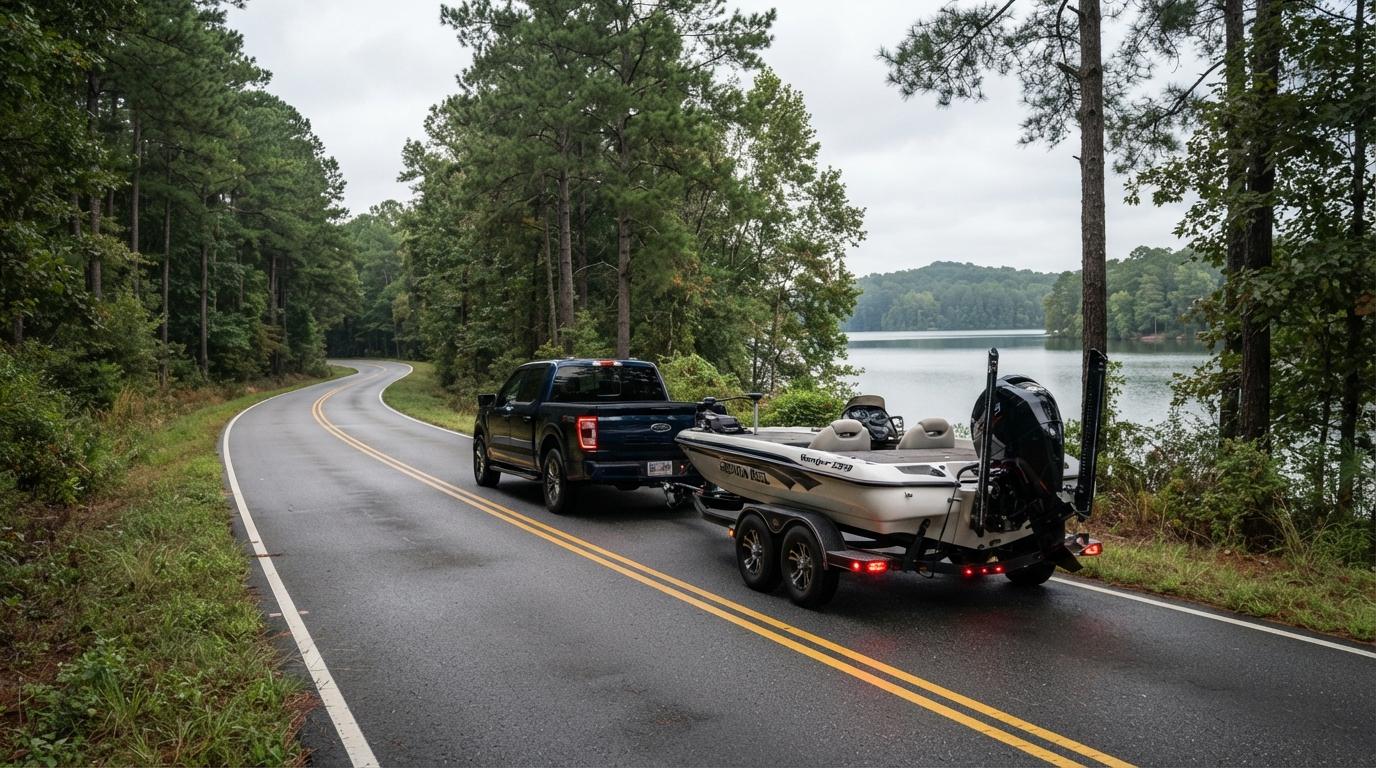
A boat breakdown rarely happens at a convenient time. Across Georgia, owners head out on Lake Lanier, Allatoona Lake, Lake Hartwell, and smaller reservoirs expecting a normal day, only to discover a dead battery, engine trouble, or an empty fuel tank far from the ramp.
Towing assistance coverage matters because marine emergency service is often specialized, limited by location, and priced much higher than roadside help for a car.
Even though this site is based in Woodstock, the issue affects boaters throughout Georgia, especially on busy summer weekends when service demand rises and response times can stretch.
Why Emergency Service Costs Surprise Boat Owners
Many Georgia boat owners assume a tow back to the marina will be modest, but on-water service often includes dispatch fees, mileage, time on the water, after-hours charges, and recovery complications if the vessel is drifting near hazards.
A short tow on a crowded holiday weekend near Atlanta-area lakes may still cost far more than expected, and a longer run in rough conditions can become expensive quickly.
Fuel delivery is another common surprise because the service vessel is not just bringing gasoline; it is bringing staff, equipment, and emergency response capability. That is why towing assistance coverage can be valuable even for experienced owners who maintain their boats carefully.
What Towing Assistance Coverage May Pay For
Towing assistance coverage may pay for several kinds of emergency help when a covered boat becomes disabled on the water. The most recognized benefit is on-water towing to a marina, boat ramp, or repair facility when the vessel cannot operate safely under its own power.
Depending on the policy, coverage may also apply to jump starts for a dead battery, fuel delivery when you run out of gas, and basic on-site labor to get the boat moving again.
Some policies focus on emergency service only, while others have specific dollar limits, distance restrictions, or approved provider rules. Reading the details matters because the covered service and the covered amount are not always the same thing.
Not sure your coverage is enough?
A local agent at The Larson Group can check it with you, free.
Licensed Georgia agents · The Larson Group
When On-Water Towing Is Most Likely to Help
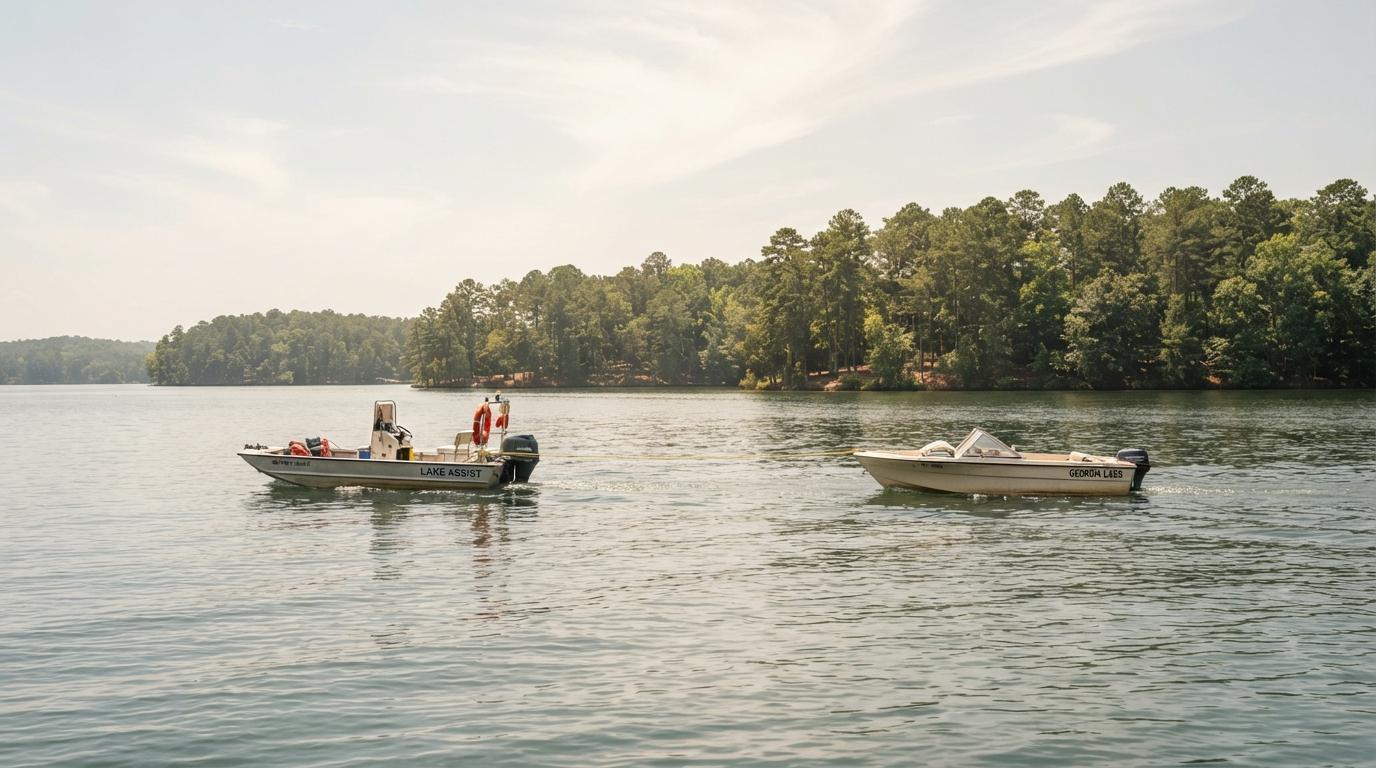
On-water towing is often the core reason boaters add this coverage. If an engine fails in open water on Lake Lanier or a sterndrive issue leaves you unable to return from a day trip near Buford or Cumming, the service may pay to have the vessel towed to a safe destination.
This can be especially important if weather shifts quickly or boat traffic is heavy. In Georgia, summer storms can build fast, and a disabled vessel may become a safety problem long before it becomes a repair problem.
Towing assistance may also help when steering failure, propeller damage, or mechanical overheating leaves the boat operable in theory but unsafe in practice.
How Jump Starts and Fuel Delivery Fit Into Coverage
Not every breakdown requires a full tow. Sometimes the problem is a drained battery after a long day using electronics, a stereo, lights, or a trolling motor, especially on fishing trips or family outings.
In that case, towing assistance coverage may pay for a jump start or battery service call if the policy includes it. Fuel delivery is another frequent claim scenario. A boater may misjudge distance, idle time, or fuel burn while pulling skiers or cruising large Georgia lakes.
Coverage may help with the emergency delivery service, though the actual cost of the fuel itself may or may not be included. That distinction is one of the most important details to confirm before a loss happens.
Want a quote for your own policy?
It takes a few minutes and there is no obligation.
Licensed Georgia agents · The Larson Group
Why Coverage Details Matter More Than Boat Owners Expect
The phrase towing assistance sounds simple, but policy wording can change the real value of the coverage. Some plans reimburse up to a set amount per event, while others may have annual limits or narrower definitions of emergency service.
There may be differences between a tow due to mechanical breakdown and a request for non-emergency convenience. Some policies require the disablement to happen on the water, not while loading or launching. Others may limit payment if the service is arranged outside a preferred network.
For Georgia boaters traveling between Roswell, Marietta, Alpharetta, Kennesaw, and other metro areas to launch at different lakes, understanding those details in advance can prevent an unpleasant bill later.
How This Applies Across Georgia
Statewide, towing assistance matters because Georgia boating is spread across very different waterways. A breakdown near a busy marina outside Atlanta may bring faster response than a problem on a quieter stretch of water farther from service providers.
Large, popular destinations such as Lake Lanier and Allatoona Lake can see heavy seasonal traffic, while other areas may have fewer nearby marine towing operators.
Boaters from Woodstock, Canton, Acworth, Sandy Springs, and Dunwoody often trailer to different launch points, which means service availability can change from trip to trip.
Throughout Georgia, the farther you are from a ramp, marina, or repair dock, the more valuable a well-defined towing assistance benefit can become.
What to Do Before You Need Emergency On-Water Help
Before your next trip, review your boat policy and look specifically for towing assistance language, service limits, reimbursement rules, and any conditions tied to covered disablement. Keep emergency contact information with your registration paperwork and save it on your phone.
Check battery health, fuel levels, and basic engine systems before leaving the dock, because prevention still matters even with good coverage. If you boat throughout Georgia, think about where you actually use the vessel most often and how far those locations are from marinas or service providers.
When comparing policies or requesting a quote, ask direct questions about towing, jump starts, fuel delivery, and out-of-pocket costs so there are fewer surprises later.
Your next step
Need Help With Boat Insurance?
Use these guides to understand your options, then request a quote when you are ready.
Licensed Georgia agents · The Larson Group
