

What Wreckage Removal Coverage Is in GA
Wreckage removal coverage is a boat insurance protection that helps pay the cost of removing a sunken, stranded, burned, or badly damaged vessel after a covered loss.
In GA, this can include salvage operations, towing the wreck, debris handling, and disposal when a boat creates a navigation hazard or environmental concern.
This coverage matters for owners with boats on Lake Lanier, Allatoona Lake, Lake Oconee, West Point Lake, and other waterways across the state because removal bills can be much higher than many people expect.
Even a smaller fishing boat or runabout can generate major costs once cranes, barges, dive teams, marina access, and fuel spill response are involved.
Why Wreckage Removal Matters Throughout GA
GA boat owners face a wide mix of water conditions, traffic patterns, and weather risks depending on where they boat. High-use areas around Atlanta, Marietta, Roswell, and Alpharetta often mean crowded launches and marinas on nearby lakes, increasing the chance of collision or grounding.
In North Georgia, sudden storms, submerged hazards, and changing water levels can leave a vessel disabled or partially sunk. Across the state, a wreck may have to be removed quickly if it blocks a channel, threatens shoreline property, or leaks fuel.
Georgia boating laws, marina contracts, and law enforcement directives may all create urgency, so having dedicated wreckage removal coverage can prevent a difficult situation from becoming a major out-of-pocket financial loss.
Not sure your coverage is enough?
A local agent at The Larson Group can check it with you, free.
Licensed Georgia agents · The Larson Group
What Wreckage Removal Coverage Typically Covers
This coverage generally applies when a covered claim leaves a boat submerged, disabled, or damaged to the point that removal is necessary.
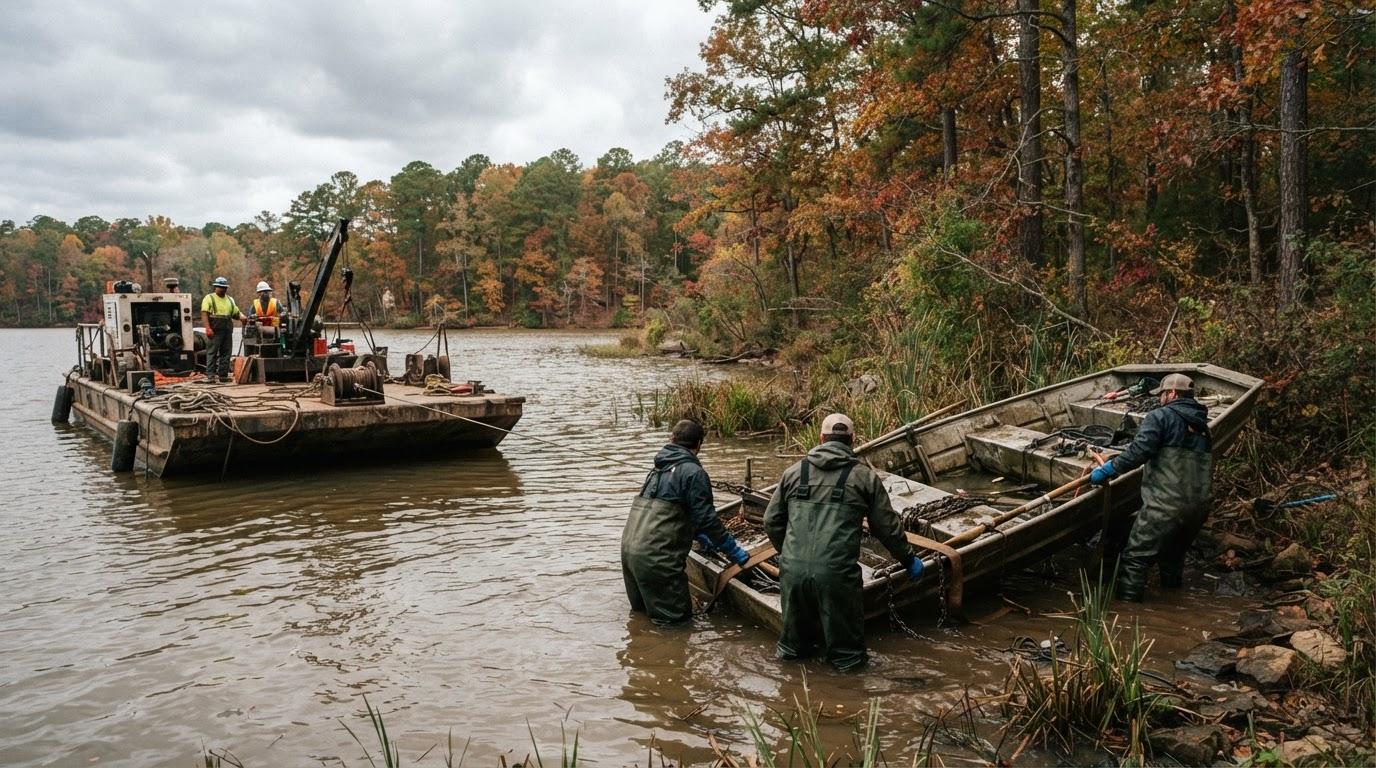
Depending on the policy, covered costs may include salvage labor, use of specialized equipment, underwater recovery, towing to shore, debris removal, and legal disposal of the wreck.
Some policies may also respond to related cleanup when parts of the vessel, such as fiberglass fragments or floating debris, create a hazard. In GA, coverage details matter because some policies include wreckage removal within the hull limit while others provide a separate amount.
It is also important to review exclusions, such as wear and tear, gradual deterioration, or losses caused by an uncovered event.
Key Benefits of Wreckage Removal Coverage
- Helps pay for salvage and recovery after a covered sinking, fire, collision, or storm loss
- Can cover towing, crane use, diver services, and transport of the wreck to an approved site
- Supports faster compliance when a marina, water authority, or law enforcement requires removal
- Reduces the chance of large out-of-pocket costs after a serious boating accident in GA
- May help address hazardous debris that threatens nearby docks, shorelines, or boat traffic
Factors Affecting Wreckage Removal Rates in GA
The cost of adding wreckage removal coverage in GA usually depends on the boat itself and where it is used. Insurers often look at the vessel’s length, age, type, horsepower, value, and whether it is stored in a slip, on a trailer, or in dry storage.
Rates may be influenced by high-traffic boating areas near Atlanta, Sandy Springs, Dunwoody, and Cumming, where congestion can increase accident exposure. Boating on larger lakes or remote areas can also affect expected salvage costs because equipment access and recovery logistics vary.
Prior claims, operator experience, navigation territory, and selected deductible all play a role. The most important pricing issue is whether the policy provides meaningful wreckage removal limits for real Georgia salvage conditions.
Want a quote for your own policy?
It takes a few minutes and there is no obligation.
Licensed Georgia agents · The Larson Group
How Wreckage Removal Claims Work
A wreckage removal claim usually begins right after a covered incident such as a collision, sinking, fire, or severe storm event. The first step is protecting people and reporting the loss to the insurer as quickly as possible.
In GA, owners may also need to notify marina management, lake authorities, or law enforcement depending on where the event occurred. The insurer typically assigns an adjuster, reviews the cause of loss, confirms coverage, and may coordinate with approved salvage vendors.
Documentation helps, including photos, witness details, incident reports, and repair or recovery estimates.
Because a sunken boat can create immediate safety and pollution concerns, claims involving wreckage removal often move faster than standard repair-only claims, especially when the vessel is blocking traffic or leaking fluids.
Common Mistakes About Wreckage Removal Coverage
One of the biggest misconceptions is assuming a standard boat policy automatically pays every cost to raise and remove a vessel. In reality, policy wording matters, and the available limit may be lower than the actual bill.
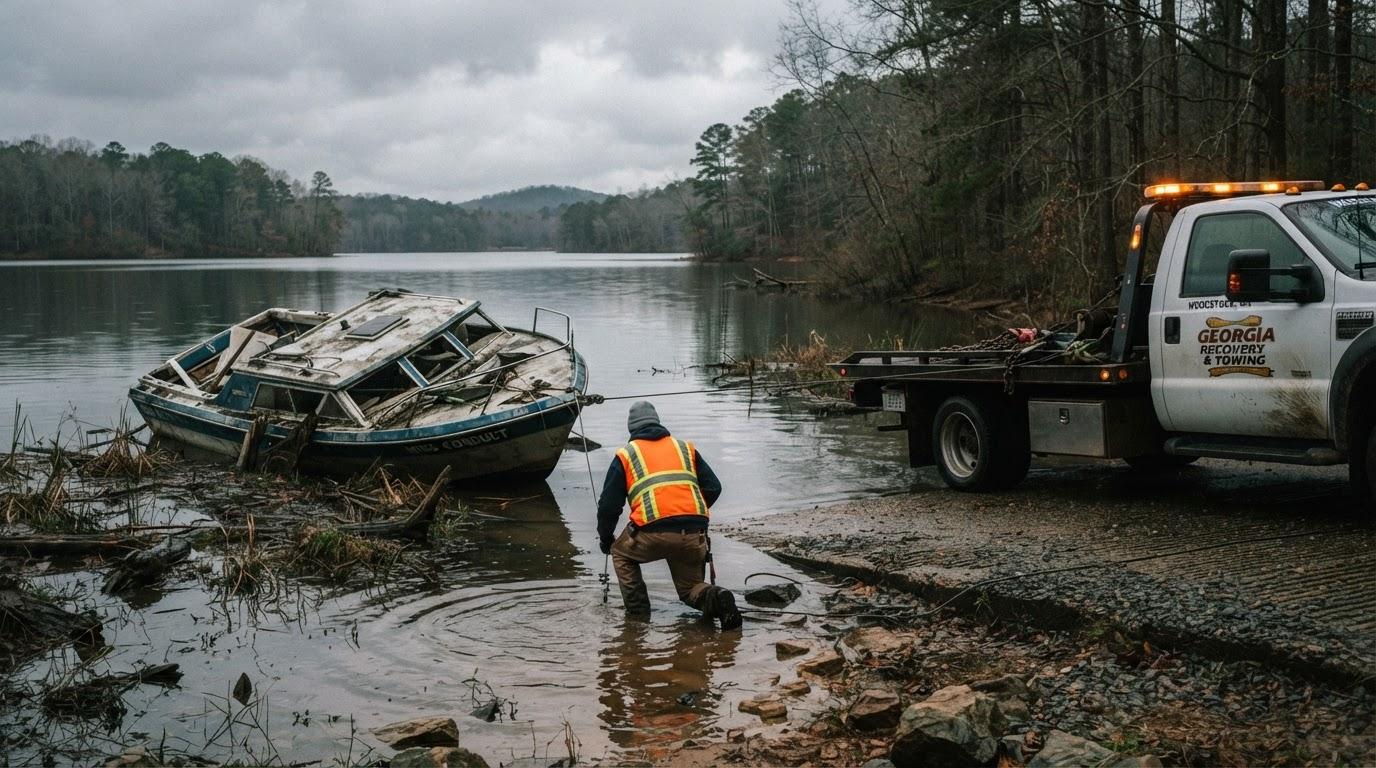
Another mistake is believing an older or lower-value boat will be cheap to remove. On Georgia lakes, the recovery expense can exceed the boat’s market value because salvage crews charge for labor, equipment, travel, and safe disposal.
Some owners also overlook marina contract requirements or assume homeowners insurance will help, which is often not the case. Finally, people sometimes wait too long to report the loss, creating added expense or compliance issues when authorities require prompt action.
Have a question about your policy?
Ask a local agent at The Larson Group. The quote is free.
Licensed Georgia agents · The Larson Group
Choosing the Right Wreckage Removal Coverage Level in GA
The right coverage level depends on how and where the boat is used across GA. A small bass boat launched occasionally near Acworth or Kennesaw may need a different limit than a larger cruiser kept in a slip and used regularly on Lake Lanier or other major lakes.
Owners should consider the vessel size, storage method, fuel capacity, local marina requirements, and the likely cost of cranes, divers, towing, and debris cleanup in their boating area.
It is wise to ask whether wreckage removal is included inside the hull limit or available as additional protection. Reviewing deductibles and endorsements carefully can help avoid gaps, especially for boats used in busy areas from Atlanta to Buford and throughout the state.
Getting Wreckage Removal Coverage Across GA
Getting covered starts with a boat insurance review focused on how the vessel is used throughout GA, not just its market value. Owners should be ready to share the boat’s make, model, length, horsepower, storage location, navigation territory, and any prior losses.
From Woodstock as the site’s home base to service areas including Atlanta, Marietta, Roswell, Alpharetta, Canton, and Smyrna, the goal is to compare policy language closely and confirm whether wreckage removal is broad enough for real-world Georgia losses.
Ask about separate limits, exclusions, salvage coordination, and whether fuel spill or debris cleanup is included. A careful review before the boating season can make it much easier to handle a serious loss anywhere in GA.
Frequently Asked Questions
How much does wreckage removal coverage cost in GA?
What does wreckage removal coverage pay for?
Do I need wreckage removal coverage in GA?
How do I get wreckage removal coverage in Woodstock and across GA?
Will a marina require wreckage removal coverage?
Your next step
Get a quote that includes wreckage removal coverage in ga
Compare coverage options for GA and get help choosing the right policy.
Licensed Georgia agents · The Larson Group